Click here to view or download Daniel Lauber’s resume.

| Click here to contact Planning/Communications Click here to view or download Daniel Lauber’s resume. | | |
| Professional city planning since 1973 |
Planning, Zoning, and Land Use Law
Our professional city planner and attorney offers full planning and zoning services to municipalities, counties, states, and developers. Our staff includes Daniel Lauber, President of the American Institute of Certified Planners (2002–2005, 1992–1994) and President of the American Planning Association (1985–1986). Click “Contact Us” to request additional information. Click here for Daniel’s planning and law resume.
Ongoing Affordable Housing Crisis Predicted in 1981
“But unless the action and policies called for here are adopted and implemented within the next few years, America’s middle class faces an otherwise unavoidable housing disaster, the likes of which we have not seen since the Great Depression.” — Daniel Lauber, written testimony March 31, 1981.
Written and oral testimony to Congress by Planning/Communications’ President Daniel Lauber, AICP. explains how unbridled conversion of profitable and affordable rental housing to condominiums in the mid–1970s and early 1980s wiped out much of the nation’s affordable rental housing stock by increasing the cost of living in converted units an average of 60 to 100 percent, contributing to inflation in housing costs and leading to the growing affordable housing crisis of the past 40 years. Just about everything he warned would occur has happened. And once the rest of the housing industry adopted the practices of the condominium converters, that “unavoidable housing disaster” of which he spoke arrived in the past decade. Download the complete oral and written testimony presented to the U.S. House of Representatives on March 30-31 and April 1 1981 by clicking here. (Large 78 MB file)
Community Residences and Fair Housing
We are nationally known for decades of pioneering work to bring rationality to the zoning for “community residences” for people with disabilities: group homes, recovery communities, sober homes, and small halfway houses for people with mental illness or people in recovery from drug and alcohol addictions.
Click here for information on, and resources for, legal zoning for community residences.
Imagine applying the legal and planning skills that have won zoning approval for NIMBYs or LULUs (Locally Unwanted Land Uses) to your development project, large or small. Imagine winning neighborhood support and preventing neighborhood opposition from even getting started.
That’s what Planning/Communications has been doing for over 35 years. We have successfully represented development proposals that typically generate vociferous neighborhood opposition, including a drive–in bank in a high–class suburb’s residential neighborhood; multiple–family housing in a hostile single–family community; and countless group homes, sober homes, small asssisted living facilities, and halfway houses for people with disabilities — the sort of proposals that tend to stir up prospective neighbors.
We know how to make a worthy development proposal desirable to the prospective neighbors. We have successfully approached the surrounding community at an early stage and not only prevented substantial neighborhood opposition from forming, but garnered substantial neighborhood support for developments that ordinarily face significant opposition. We can help you fine–tune your development proposal to win neighborhood support —reducing the length of time needed to win zoning approval and avoid any need to go to court.
Whether you seek to build a large development, affordable housing for households with modest incomes, or a community residence for people with disabilities, we have the unique skills and extensive experience to provide the legal representation or expert witnessing you need to get a fair hearing from the city and from the neighbors — and a decision based on the facts presented, not myths and misconceptions.
Imagine having these skills working on the side of your proposal, be it for a single lot or a major development. Think of the time and money you’ll save, not to mention the headaches and ulcers you’ll avoid. For more, click here. Click “Contact Us” to request additional information. Click here for Daniel’s resume.
Click here for affordable housing services, resources, and clients.
Surveys: Housing Needs, Community Views, and More
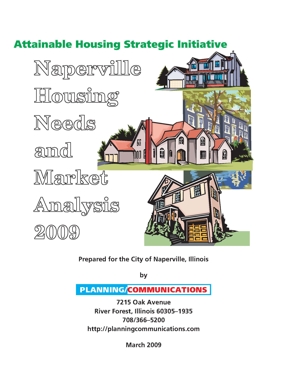 Want to conduct a really accurate random–sample survey to determine your community’s needs, such as housing, employment, commuting, or economic development? Tired of surveys that produce a self–selecting 15% response rate that does not represent the entire community?
Using a variety of tools to encourage responses, the most recent random–sample survey of residents we conducted for a Chicago suburb produced a 66% response rate — assuring that the sample actually does represent the entire community. For more information, please call Daniel Lauber at 708/366–5200 or email him. And see the study and survey by clicking here.
Analyses of Impediments to Fair Housing Choice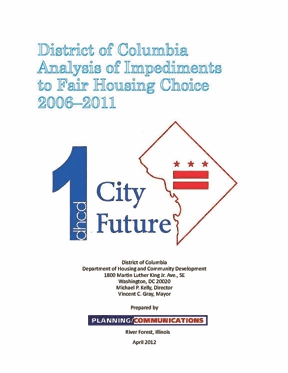
Time to prepare your community’s Analysis of Impediments to Fair Housing Choice? Realize that conducting the analysis yourself is an inherent conflict of interest and puts staff in an impossible position?
Click here to see how we can conduct a genuinely fair and balanced AI that meets the standards of the “Westchester County Doctrine” and HUD’s likely new standards. See the latest innovative and thorough award–winning “AI” we have conducted which one leading fair housing expert calls “the gold standard” of AIs. Click for testimonials.
Achieving Stable, Racially–Integrated Communities
With apologies to rock stars Elvis Costello and Nick Lowe, “What’s so funny about stable, racially–integrated communities?” See how the extreme levels of racially–segregated housing keep America from being all it can be — for all its citizens. Discover the techniques cities use to achieve and maintain stable, racially–integrated communities. To download or view online the PDF file of the study, click here to view or download Ending American Apartheid: How Cities Achieve and Maintain Racial Diversity. This research continues to be a work in progress.
What would the Chicago area look like if the housing market were free of racial and ethnic discrimination?
Click here to view or download a copy of the legendary (at least in the Chicago area) 1991 study Black, White and Shades of Brown: Fair Housing and Economic Opportunity in the Chicago Region. This report identifies what the racial composition of each of 117 Chicago suburbs would be if racial discrimination did not distort the housing market, and if income rather than race or ethnicity was the principle determinant of where people live. Fascinating reading from the late Leadership Council for Metropolitan Open Communities. It’s an 11.9 megabyte file. We apply the technique used in this study in the Analyses of Impediments to Fair Housing Choice that we conduct.
Also available is the April 2005 study Long Island Fair Housing: A State of Inequity — Institutional and Structural Racism in Housing: The Status of Current Enforcement Systems and Recommendations For Improvement by the organization ERASE Racism.
Subsidiaries:
Computer Building & Repair: Click here for our computer division.

While we have left the book publishing business, our Job Quest Online Bookstore still has some books, videos, and software available at substantial discounts. The URL jobfindersonline.com is for sale.
Click here to contact Planning/Communications.
Work Songs (to lighten your job–search load)
Study Finds Obama Has More Experience Than Most Rivals
As part of our devotion to facts and truth, we conducted a simple study in 2008 to identify how much actual experience each presidential candidate had as an elected official. We found that it wasn’t who the campaign rhetoric suggested.
Topping the principal Democratic contenders was Senator Barack Obama with … Click here for more
By contacting this website you are not creating an attorney–client relationship. Such a relationship would begin only upon signing a written fee and retention agreement. Moreover, no communication on this website should be considered privileged under the attorney–client privilege. Please be advised that there is no expectation of confidentiality regarding any communication you may send us in response to this website.