and ask to be placed on our email list. You’ll receive no more than ten emails a year, probably a lot fewer.
To receive occasional River Forest Matters Email Alerts:
and ask to be placed on our email list. You’ll receive no more than ten emails a year, probably a lot fewer.
A look into the recent past. Sorry, but I haven’t updated this site in quite a while.
But you’ll find a treasure trove of recent River Forest history here.
Board Adopts Deficient Affordable Housing Plan by 4-3 Vote |
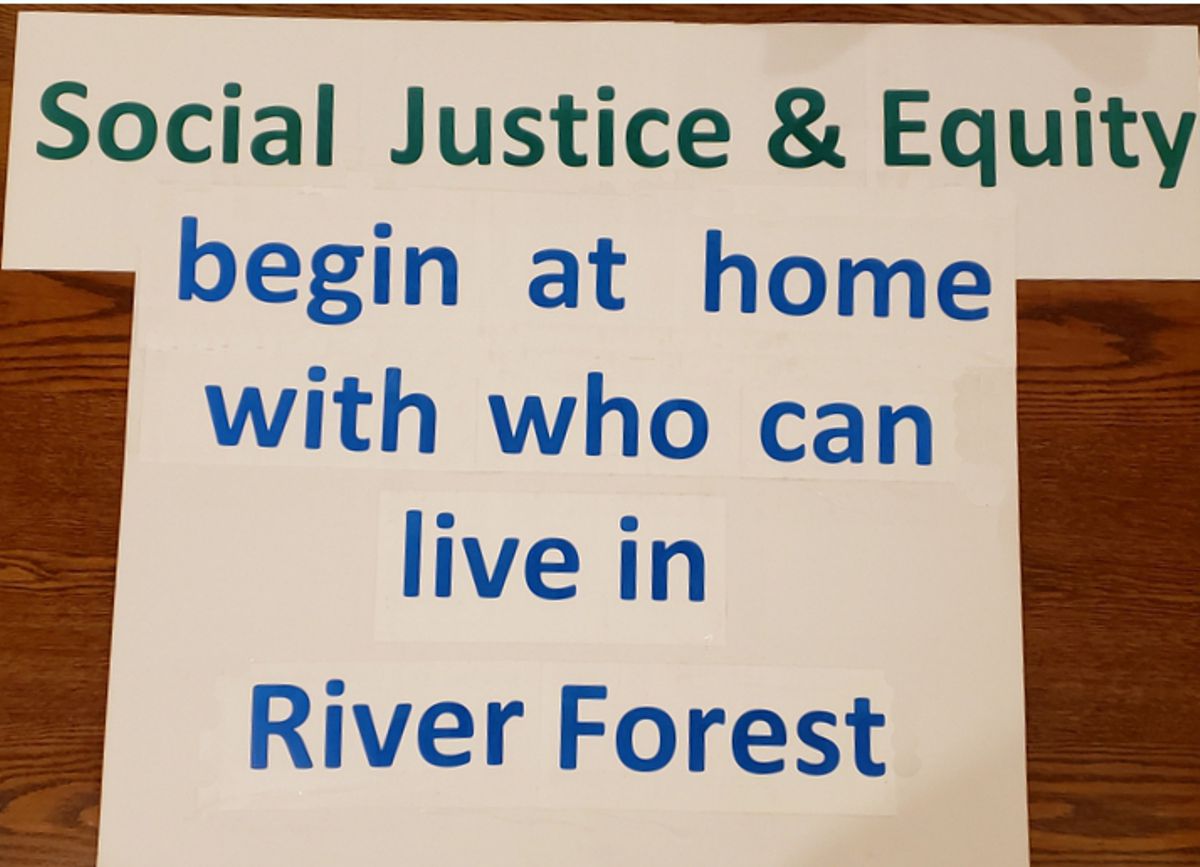
Following nearly five hours of resident comment and often heated board debate, the River Forest Village Board adopted the woefully deficient Affordable Housing Plan with Village President Cathy Adduci casting the decisive vote to break a 3-3 tie. Trustees voting “No” — Katie Brennan, Patty Henek, and Erika Bachner — sought a stronger plan with teeth, more accurate data, and originality. Nearly half of the plan was word–for–word identical to a 2004 plan for Wilmette. Those voting to adopt the plan — Adduci, Respicio Vazquez, Tom Cargie, and Bob O’Connell — excused using entire sections of another community’s 16-year old plan and rejected efforts to put teeth into the plan. The vast majority of the 15+ residents who spoke sought a stronger and original plan with meat to it and urged a “No” vote. More than 40 written comments calling for a stronger plan were submitted — the board’s rule to read them into the record was ignored. Plan Commissioner, Carolyn Kilbride, Trustee Cargie, Plan Commission Chair David Crosby and consultant John Houseal all engaged in a lengthy curious defense that reusing so much language from another community’s plan without attribution was simply using a “template.” All in all, trustees Bachner, Henek, and Brennan demonstrated what genuine informed, responsive, and progressive leadership looks like and, frankly, we can be incredibly proud of their committment to serving all residents of River Forest including those of lesser financial means. They all delivered some of the most stirring, impassioned, and moving speeches presented at a River Forest village board meeting in the 32 years I’ve lived here. President Adduci made a slew of promises to move forward with all sorts of initiatives. It is critical that residents hold her accountable to actually implement these verbal pledges. For more substantive details on what’s wrong with the plan in addition to much of it being word–for word–identical to Wilmette’s 2004 plan, click here to see my article in the Wednesday Journal.
|  |
 | |
| Fact: Of Illinois’ 1,298 municipalities, 1,249 have a higher proportion of affordable housing than River Forest. Only 48 have a lower percentage. Source: Illinois Housing Development Authority, Affordable Housing Planning and Appeal Act: 2018 Report on Statewide Local Government Affordability – Ordinal Listing. This is the most recently published list. | 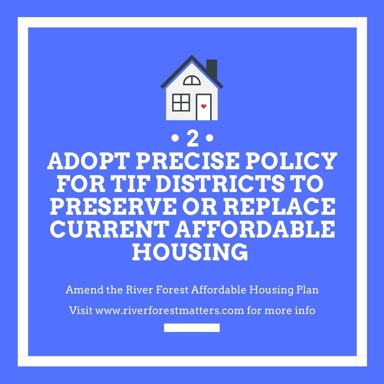 |
It’s become very clear that the majority of the Plan Commission and majority of the Village Board didn’t really know what they were approving. In response to a letter from Opportunity Knocks, the Plan Commission put in a recommendation to allow “independent supportive housing” and the consultant put into the proposed “Affordable Housing Implementation Plan” an action item to examine the village’s zoning and codes for changes needed to allow independent supportive housing. But there are no changes needed — such housing can be established today, if it’s financially viable to rent an apartment. Supportive integrated housing is simply housing for folks with disabilities or other issues like homelessness where they receive supportive services. Opportunity Knocks was saying that they needed less expensive, i.e. affordable housing, for supportive integrative housing to be viable in River Forest. Based on what has transpired, it is likely that the majority of the Plan Commission and the Village Board actually did not know what independent supportive housing actually is. |  |
| Download the revised plan with comments explaining what’s wrong with it by clicking here. Revised Plan Continues to be Highly Deficient With Unsubstantiated Faulty Assertions About Affordable Housing |  |
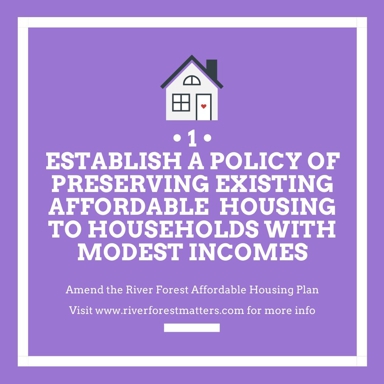
| As the notes on the annotated copy of the plan you can download above make clear, despite a handful of improved language, the plan has no teeth, includes questionable data, and leaves out essential data on housing affordability in River Forest. At its May 20 meeting, the majority of the Plan Commission declined to put some teeth into the plan, refused to even consider adding the five provisions shown below, and wouldn’t even discuss the other changes recommended in comments on the plan. Why this matters. Zoning and development decisions are required by law to be in accordance with the comprehensive plan (as well as local laws). The proposed Affordable Housing Plan does not make any recommendations to amend the Comprehensive Plan or adopt ordinances that commit the village to preserving affordable housing and adding to our small supply of housing seniors, nurses and technicians, teachers, small business owners, grown children, our parents, and others with modest incomes can afford. Consequently, the Affordable Housing Plan needs to be amended to include the following recommendations to amend the Comprehensive Plan and recommend adopting these ordinances and policies — otherwise it has no teeth: |  |
A recommendation to amend River Forest’s Comprehensive Plan to establish a policy of preserving existing
housing affordable to households with modest incomes
A recommendation to adopt effective incentivized inclusionary zoning
A recommendation to adopt the policy that at least 15 percent of dwelling units in all new developments
that include multi-family housing be affordable to households of modest incomes
A recommendation to adopt a precise policy for TIF districts to either maintain existing multi-family and
single family housing affordable to households with modest incomes or replace existing affordable housing
with new affordable units in new developments in the TIF districts on a one for one basis
Establish a goal of at least 10% housing affordable to households with modest incomes instead limiting it to 10%
Without these concrete recommendations, the plan lacks the teeth needed to preserve existing
affordable housing and get new affordable housing built at no taxpayer expense that
enables River Foresters to continue to live in River Forest.
Previously on the Affordable Housing Plan…
Jan 21: Nothing Affordable About Draft “Affordable Housing Plan”
With two proposed River Forest developments seeking to demolish current condos and apartments affordable to households with modest incomes, it's a gross disappointment that the rudimentary and seriously inadequate six–page draft “Affordable Housing Plan” (link will get you the second draft discussed above) for River Forest offers nothing to actually preserve or increase the village’s supply of housing affordable to seniors, our adult children, teachers, librarians, nurses, village employees, recent college graduates, social workers, and anybody else in a job that pays a modest income less than the village’s $107,000 median and Chicago area’s median of $71,000.
| This sorry excuse for an affordable housing plan reflects the previous village board’s refusal to commit to preserve affordable housing in the village’s Comprehensive Plan. It will take a large turnout of citizens at the Plan Commission’s January 21 public hearing (7 pm, Village Hall, 400 Park) on this draft “Affordable Housing Plan” and later at the Village Board’s meeting (date to be determined) to convince the Plan Commission and Village Board to reject this plan and instead adopt a plan that actually commits the village to preserving existing affordable housing and expanding the supply through incentivized inclusionary zoning (very successful approach). If the Plan Commission recommends the Village Board adopt this plan, the ability of many current residents with modest incomes to continue to live here will be at risk. We need the Plan Commission to reject this draft of the plan and, among other things, adopt the changes suggested below. To see what’s wrong with the plan, please click here to see this annotated third (May 1) draft. The plan is too narrowly focused, lacks data on the affordability of existing housing to current River Forest residents, contains misleading and unsubstantiated assertions about affordable housing and bearing the cost of affordable housing, shows little understanding of how cities have preserved affordable housing and gotten new affordable housing built at no cost to the taxpayers or the developers by adopting incentivized inclusionary zoning. We need to get the Plan Commission to further revise this draft as suggested in the draft you can download here. Get armed with the facts. More factual detailed information on inclusionary zoning is available at: http://www.planningcommunications.com/housing/resources.htm | Why this plan matters so much This plan helps determine who can continue to live in River Forest, pure and simple. If your annual income is significantly below the 2013–2017 median River Forest household income of $107,000 (half are above it, half below; the median could be higher today), this plan and the village’s Comprehensive Plan fail to commit the village to preserving the housing you live in and do nothing to facilitate the construction of new housing you can afford. This matters because zoning and development decisions are supposed to be made in accord with the village’s plans. If this Affordable Housing Plan and the village’s Comprehensive Plan fail to commit the village to preserving existing affordable housing and require replacement of any that is removed, then there will be nothing to stop developers from forcing you and your neighbors out of River Forest. The household income of about half of River Forest's seniors is less than the $71,000 “area median income” for the Chicagoland area. The 2017 median for River Forest seniors was $71,474. The median for single mothers with children was just $53,636; $48,472 for a woman living alone; $82,639 for a male living alone. River Forest has a small supply of housing these citizens of River Forest can afford. The North Avenue and Madison Street TIF districts threaten much of this housing since, let's face it, the primary purpose of these districts is to replace existing structures with more expensive housing and businesses. But government should never use its powers to raise the cost of housing and force residents out of River Forest. So it’s critical that you email your comments as instructed above before 5 pm May 20 to Lisa Scheiner at lscheiner@vrf.us — same deadline to send an email telling her you would like to speak at the meeting via telephone. |
For this plan to actually provide guidance to preserve and create housing our teachers, seniors, and others with modest incomes can afford, the plan needs to be revised to:
Recommend amending River Forest’s Comprehensive Plan to establish a policy of preserving existing multi-family and single family housing affordable to households with modest incomes
Recommend adopting effective incentivized inclusionary zoning
Recommend the policy that at least 15 percent of dwelling units in all new developments that include multi-family housing be affordable to households of modest incomes
Recommend adoption of a precise policy for TIF districts to either maintain existing multi-family and single family housing affordable to households with modest incomes or replace existing affordable housing with new affordable units in new developments in the TIF districts on a one for one basis
So be sure to “attend” the Plan Commission’s public hearing on the draft plan at 7 pm on Wednesday, May 20 via telephone. The plan is the only item on the agenda.
Developments Currently Threatening Affordable Homes: The proposed high–priced development at 1100-1110 Bonnie Brae would demolish an apartment building with affordable dwellings. A new proposal to build a medical office building on the southeast corner of Park and Lake would demolish a six townhouses occupied by households with modest incomes who would be forced out of River Forest due to a lack of homes in their price range. The previous Village Board opened the door for developers to seek to remove them from our housing stock by rejecting language for the Comprehensive Plan that would have committed the village to preserve these affordable dwellings or require replacement of them with no displacement.
Comprehensive Plan came up short on affordable housing, street lighting and safety, and common sense
Previous Village Board Rejected Preserving Affordable Housing
It’s as if nobody listened to all the residents who attended the visioning session in 2018 for the village’s new comprehensive plan. Affordable housing was the concern Number One. Improved streetlighting was a close second or third.
You’d barely know it given the new final draft River Forest Forward comprehensive plan the previous Village Board adopted in spring 2019.
Let me make it very clear: The plan contains many praise–worthy elements. ThePlan Commission dismissed the citizen comments on affordable housing and the village board led by President Aducci and Trustee Cargie also refused to commit to preserving existing housing affordable to the middle class and not allow displacement without replacement.
Overall, the plan lacks much of the demographic information normally included in a comprehensive plan. That information tells us who we are and provides the foundation for a fact–based plan. It helps identify the impacts on the people who live here — and isn’t planning all about the impacts on people? Demographics are mentioned in three short paragraphs (page 7). There is no mention of economic, racial, or ethnic diversity — likely because there is less than one might hope for in River Forest. By failing to present the village’s demographics in detail, the plan hides some of its most glaring weaknesses.
And the plan includes a number of provisions that defy common sense as explained far below.
Affordable Housing: Missed Opportunities
River Forest’s shortage of housing affordable to teachers, retired seniors, librarians, first responders, recent college graduates, people who work within our borders, social workers, clerks, and others in fields that are not high–salaried was issue Number One at the April 2018 visioning session. Attendees expressed concern that residents of the North Avenue and Madison Street TIF districts would be forced out of their homes by developers subsidized by our tax dollars (the TIF funds). They were particularly concerned about the loss of affordable rentals and condominiums in those TIF districts.
Sadly the final plan remains tone death on housing affordability and pays only lip service to these concerns. It notes that less than 10 percent of the village’s housing is rental (page 7) — but fails to put figure into perspective. The reality is that 10 percent is an extremely low percentage, typical of exclusionary communities. The graphic on page 9 suggests that there are more vacant dwellings in River Forest than there are rental units.
The plan misses a lot of opportunities to reflect the concerns expressed at the visioning meeting. On pages 16 and 24, it lacks a core objective to preserve existing affordable housing and expand its supply. There’s nothing in the “Residential Neighborhoods” (pages 24–28) except two very weak paragraphs on “housing affordability” on page 26.
The plan misses a great opportunity to show respect for issue Number One. On page 26 it says, “Throughout the Village
there are also smaller, older single-family homes that are relatively affordable. However, many of the more modest single-family homes are likely candidates for teardown and infill redevelopment.” Absolutely nothing about preserving that affordable ownership housing — instead the plan sounds like the village wants that housing demolished and replaced with more expensive housing unaffordable to most of the middle class.
In the next paragraph the plan suggests the village adopt an Affordable Housing Plan that meets state requirements. The state requirements are bogus — the plan is referring to the unenforceable Illinois Affordable Housing Planning & Appeal Act which sets a minimum of 10 percent affordable housing in communities (which River Forest does not meet). That’s a purely arbitrary figure chosen because it could get through the General Assembly. But as any professional planner worth her salt will tell you, that is not how we measure housing need or affordability. Instead we look at the percentage of households in a community that are cost–burdened, spending 30 percent or more of their income on housing. More than 42 percent of River Forest tenants are cost–burdened and there is nothing in this plan that promises to facilitate the preservation or construction of housing they can afford.
The plan also states the village should “appropriately consider” affordable units as a component of future residential development.” That is no commitment. The plan should instead read “Any development that seeks to exceed the current residential density allowed as of right, should be required to make 15 to 20 percent of all units affordable to households of modest incomes in exchange for being allowed to exceed current density limits.” That’s the sort of inclusionary zoning that gets affordable units built at no cost to taxpayers and produces mixed income development. That’s the sort of requirement that should be applied to our TIF districts so current residents of modest means are not forced out of River Forest by TIF–enabled developers. That’s the sort of provision that belongs in a plan intended to serve all River Forest residents. (Right now the village routinely allows developers to exceed current density limits without getting anything in return.)
On page 28, the plan claims there is a “wide range of housing options” which we all know is a gross exaggeration when less than 10 percent of our housing is rental and the village’s zoning effectively excludes group homes for the frail elderly which would enable so many of our most elderly residents to age in place in River Forest.
Another missed opportunity: On page 30, the plan should include a core objective that provides when new commercial development would remove affordable dwelling units, those units must be replaced with equally affordable units. That would help protect the residents in the TIF districts from the village enabling developers to force them out of River Forest.
The plan proposed taller heights for commercial and mixed use buildings with us getting nothing in exchange. The plan should allow taller buildings only if 15 to 20 percent of their dwelling units be affordable housing for the middle class. (page 37)
The plan misses another opportunity to show a commitment to all River Foresters on page 43 in the corridor framework plans. The plan should say that existing housing affordable to households with modest incomes should be preserved or, if removed, replaced on a one-to-one basis in new developments through density bonuses.
There are numerous opportunities in the “Corridor Framework” section to state a commitment to preserving existing affordable housing and expanding its supply in new developments. But the plan never makes that commitment.
Among the top concerns expressed at the April 2018 visioning session was poor street lighting that makes driving, bicycling, and walking unsafe. At the session folks spoke of how the inadequate street lighting made driving dangerous, especially at intersections, as well as endangered bicyclists and pedestrians. Residents explained that the street lights needed to not only better illuminate the streets but also the sidewalks and how they could do so without glaring light into people’s homes (shielding on street lights works quite well).
The plan never describes the lighting problem. All it does is suggest that the village “identify and install additional street lights and other lighting in areas that are dark or feel unsafe.” (page 95). It is kind of critical that the reasons for improved lighting be explained in the plan to provide context and guidance for implementing the recommendation.
Common Sense Missing in Action
Common sense has taken a holiday in this draft plan. On page 95, the plan calls for relocating the village’s top–notch Public Works Department to another village. Nowhere does the plan consider that doing so would make operating our Public Works Department more expensive since all public works tasks would take longer to complete with staff and machinery located outside River Forest. This is a solution in search of a problem — a solution that would force a tax increase to pay for it.
The plan calls for extensive traffic control upgrades throughout the village (67-69) that are not defined in plain English. Is it talking about more of those traffic knuckles that make traffic more congested? Why not define these upgrades in language we can all understand? And on page 75 the plan shows a massive increase in the number of stop signs throughout the village. Yet nobody knows what the impact of either proposal will be on traffic. The plan should direct the village to test these changes in, say a quadrant of the village before going village wide. That way any unintended consequences can be identified and corrected before spending a small fortune on these public works for the entire village. Test them out first! It’s just common sense and on page 100 the final plan suggests such testing, albeit not specifically for the traffic knuckles.
River Forest Matters welcomes articles of local interest. Email them to us at infoATriverforestmatters.com - substituting @ for AT
Results of Feb 25 2019 Village Board Meeting on Rules Changes
Thanks to the residents who showed up at the River Forest Village Board’s Feb 11 and Feb 25 meetings to address the “Surprise Ordinance” to change village board rules, the Board adopted the changes described below under “Positive Revisions” at its Feb. 25 meeting. Efforts to further amend the rules to require two readings of an ordinance at separate board meetings were not pursued — albeit still urged by residents during the comment period — to allow supporters time to draft balanced and effective language.
At the League of Women Voters forum Feb. 27, all the candidates for the village board supported requiring two readings, except for current trustee Mike Gibbs who continued to oppose the requirement. Gibbs, who has voiced support for term limits, is seeking his third term on the board (ironic, is it not?).
With just three days advance notice, the River Forest Village Board Feb. 11 considered an ordinance to amend its “Rules and Order of Business” that would curtail citizen comment at board meetings and allow the board to change its votes on measures at a later meeting. This ordinance is the poster child for governing by surprise.
Thanks to the residents who showed up to speak, the board had a productive discussion of the proposed ordinance and eventually tabled the ordinance to its upcoming Feb. 25 meeting. On Feb 22, the village released a revised ordinance that incorporates some of the changes residents had sought — for which we are grateful — and left out other key elements, which remains disappointing..
Click here to see or download the revised ordinance.
For background on what happened Feb. 11, click here for the Feb. 20 “One View” in the Wednesday Journal that provides more information and here for the news report on the Feb. 11 meeting and see below.
Positive Revisions:
Deletes the 30–minutes limit on citizen comment that was originally proposed
Deletes the prohibition on repetitive comments that was originally proposed
May allow flexibility on when to sign up to speak. The language is a bit unclear, but it appears that residents may be allowed to sign up to speak any time before the agenda item they wish to address comes up for discussion. Currently you must sign up to speak only before the village board meeting begins. If you can sign up any time before your agenda item comes up, you don’t have to be at the board meeting when it starts (a real improvement for residents with children).
Rule 6: Reconsideration Votes. The language is the revised ordinance is a bit of a mess and I hope that it is a typographical error. Under the revised rule, a village trustee who wants to revote on a measure from the last board meeting, must notify the village president of her request “no less than three business days after the meeting” when the original vote was taken. That's more than a bit absurd. I think the village meant the rule to say that the request must be made within three business days of the meeting when the original vote was taken. People should come to the Feb. 25 board meeting to support requiring a request for reconsideration to be made within three business days.
What the Revisions Left Out:
Ending Governing by Surprise: There’s no provision to require two readings of a ordinance at separate board meetings before a vote is taken. At least three trustee supported this requirement and two of them (trustees Henek and Conti) are out of town for the Feb. 25 board meeting. Requiring two readings would eliminate surprise ordinances where the public has, at best, three days advance notice of an ordinance up for a vote (and you get that notice only if you download the board’s agenda).
That’s what happened with the current ordinance to change the village board’s rules. The first reading will alert the media of an ordinance. The media then alerts the public. And everybody gets nearly two weeks to consider the impacts of the proposed ordinance, identify unintended consequences, and provide public input to the village board at its next meeting. That’s the very definition of “good government and citizen participation.” People should come to the Feb. 25 board meeting to request this “No Surprise Rule” be added to the ordinance to require two readings of an ordinance at separate village board meetings (with an exception for genuine emergencies). Ask for actual language can be added to the ordinance at a later date.
Rule 6: Reconsideration Votes: The revision omitted two key components to reasonable reconsideration votes.
(1) The revision left out requiring adequate advance notice to the public about the requested vote to reconsider. Rule 6 should require that everybody who had been sent a notice about the ordinance be sent a new notice about the reconsideration (within 2 business days of the request to reconsider), that everybody who commented before the village board on the ordinance at issue be notified by mail or email within two business days, and that notice of the reconsideration vote be published prominently on the village’s home page (within two business days) and in the local newspaper.
(2) Requiring the trustee who seeks a reconsideration vote to specify the reason for his request. The trustee should be required to identify any new information, error, or law that is the basis for wanting to change his vote. The trustee should be required to report all ex parte (out of meeting) contact he had on the matter at hand after the vote was taken. People should come to the Feb. 25 meeting to request that these provisions be added to the new Rule 6.
While the entire ordinance ought to be tabled until the next board meeting at which time precise language can be added to the ordinance to achieve these changes, the odds of it being tabled again are slim to none). Sign up at the podium before 7 pm Monday, Feb. 25 to address the village board (Village Hall, 400 Park Ave). It’s a short agenda so they will get to the ordinance pretty quickly.
As we’ve seen, your voice makes a difference.
Background
Adopting the No Surprise Rule will prevent a repeat of what happened at the Feb. 11 board meeting where residents had virtually no advance notification of the ordinance changing the board’s “Rules and Order of Business.”
On Feb. 11, the board’s agenda was packed with the ordinance to change the board’s “Rules and Order of Business.” Key to that change was allowing the board to hold a second vote on an ordinance at its next meeting instead of only at the meeting where the vote was taken. This substantial rule change was introduced to allow the board to take a new vote on a zoning variance that the Zoning Board of Appeals had recommended be denied. In January the board had a tie vote on a motion to overrule the ZBA and approve the variance. A few days after the vote was taken, Trustee Tom Cargie who voted to uphold the ZBA, said he had a change of heart and wanted to change his vote. The only way that could be done was if the board changed its rules at the next board meeting and those changes went into effect immediately.
| Lo and behold! The agenda for the next board meeting came out three days before the Feb. 11 meeting and it contained, seemingly out of the blue, this ordinance to amend the board’s “Rules and Order of Business.” The proposed “Rule 6: Reconsideration” was just what the doctor ordered for a trustee to change his vote: it would allow the board to revote on a measure at its next meeting instead of only at the meeting where the original vote was taken (the most common procedure). The ordinance also included a clause to put it into effect immediately upon adoption (a very rare procedure) at the Feb. 11 meeting. Coincidentally the next item on the board’s agenda was a vote to suspend its rules and vote to reconsider its previous vote on that zoning variance. | What Trustee Cargie Doesn’t Seem to Grasp… Trustee Tom Cargie wanted to revote on the zoning variance at issue because a similar variance for 30 Franklin had been okayed in the past. What Trustee Cargie ignores is that recommendations of the ZBA do not establish a precedent because each variance application is decided on the facts unique to the subject property. The facts for 30 Franklin were different than on the variance at issue. At 30 Franklin, the ZBA found that the evidence showed that extending the house’s nonconformance to the zoning code was the only way the homeowner could expand his house. The unique factors of his lot made any other approach impossible. But the house at issue in the variance application that Trustee Cargie wanted to reconsider can be expanded without extending its nonconformities. The situations were different which is why it is prudent to continue to consider these variances on a case by case basis. An element of the Village Board is seeking to allow all of these requests instead of considering them individually on their merits. |
In the ensuing board discussion, most trustees supported the idea of two readings with trustees Henek and Vazquez showing the greatest interest. Then village President Cathy Aducci voiced her opposition to two readings and several trustees began to waiver.
So it is crucial that residents come to the Feb. 25 meeting and sign up before 7 pm to speak in support of requiring two readings, no restrictions on citizen comment, and against Rule 6: Reconsideration. Under the current procedures, you must sign up at the podium before the board meeting starts. If you cannot be there at the beginning, ask a friend who is going to sign you up.
Click here to download the Feb 11 agenda, the Reconsideration Ordinance, and supporting materials. Click here for the Feb. 20 “One View” in the Wednesday Journal that provides more information and here for the news report on the Feb. 11 meeting.
So please attend Monday night’s Feb. 25 village board meeting at Village Hall (400 Park Ave, just south of Lake St). Your comments are the only way to make River Forest government fully transparent and open — and put the kabash on governing by surprise.
OLD BUSINESS
Village Board Proposal Declines to Commit to Preserving Existing Affordable Housing
Despite considerable citizen support for the River Forest Village Board to commit to preserving existing affordable housing in the proposed North Avenue Tax Incredment Financing (TIF) District that the board intends to approve Monday night, Aug. 20, 2018the board is instead proposing a unresponsive “Living Housing Policy” that ignores the concerns of residents who justifiably fear displacement under the TIF.
| On Aug 20, 2018 the Village Board will be: (1) Voting on ordinances to create the North Avenue TIF District (2) Proposing and discussing the “Living Housing Policy” for the North Avenue TIF district |
This proposed “Living Housing Policy” is totally unresponsive to the concerns that citizens raised at previous meetings on the TIF district, namely that the TIF district would not be used to force them out of their River Forest homes to make way for new development they cannot afford to rent or buy. The proposed policy completely ignores the suggestion that the Village Board commit to maintaining the current number of affordable dwellings (replacing any that are lost on a one–to–one basis) and requiring new development to include 15% to 20% affordable units to be allowed to build at a higher density than the current zoning allows. More than 880 cities and counties have adopted this sort of inclusionary housing/zoning policy. But the so–called "Living Housing Policy” does nothing of the sort.
Instead, the proposed policy assumes that there is housing in the North Avenue TIF district that is not “livable,” a term that the policy never defines. It establishes a policy to provide possible “matching funds and/or grants” for “rehabilitation, repair, or remodeling of livable housing to ensure that the liveable housing unit meets all applicable life–safety codes and requirements.” It also provides for possible matching grants and/or funds to “extend the useful life of livable housing units.”
Nowhere does the proposed “Living Housing Policy” suggest that the village is committed to maintaining and expanding the number of dwellings affordable to teachers, retired seniors, service industry workers, librarians, younger families, bank clerks, village employees, and others in jobs that pay modest incomes.
Developers, of course, will seek to build at a higher density than the current zoning allows. The sensible policy would be to allow higher densities only in exchange for these developers providing affordable units in their new residential structures that households with modest incomes can afford — most jurisdictions require that 15 to 20% of the units built be affordable in exchange for higher densities. The formula that cities adopt result in the developer getting to build more market rate units than the zoning allows as of right — thus making a greater profit and generating more property taxes — in exchange for including the affordable units. This doesn’t increase costs for the market rate dwellings and does not require any taxpayer subsidy. Everybody and the village wins!
The proposed “Living Housing Policy” was developed in complete secrecy with no citizen participation. This Aug. 20 Village Board meeting is our first opportunity to provide citizen input. It is critical that as many people as possible speak to demand that the policy be replaced or supplemented with a policy that commits the village to no displacement without affordable replacement, namely:
Committing by ordinance to preserve the existing housing affordable to households now living in the TIF district by:
A policy to not to tear down existing housing on North Avenue without affordable replacement housing being made available nearby in the TIF district and covering moving costs if existing residents have to move once or twice due to TIF district redevelopment
A mandatory policy that in exchange for building at a density higher than allowed as of right, at least 15 to 20% of the units in the new construction (rental or ownership) must be affordable to households with modest incomes
The village will not seek to use eminent domain to force the sale of residential properties or mixed use residential properties
CAUTION: If you look at the affordability charts on the last page of the “Living Housing Policy,” you’ll see that many households with modest incomes would be excluded from even this unresponsive policy. Modest incomes can be greater than what the state defines as low– and moderate–income. A serious concern is preserving housing that middle–class households can afford, not just low–and moderate–income households. Given the high cost of new construction, developers are not going to build new housing here that middle–class households with modest incomes can afford. So it’s critical that any formula for affordable housing cover households with incomes as high as 120% of the area median income like many inclusionary zoning/housing ordinances do.
So be sure on Monday, August 20 to:
Arrive at Village Hall before 7 pm
Sign up at the podium to speak on Agenda Item(s) 9a (“Livable Housing Policy”) and/or Item 7a (approval of the TIF District)
Politely explain that the “Living Housing Policy” is not responsive to your concerns — it does nothing to prevent you from being forced out of your home
Speak your mind on the agenda items you choose. Be sure to support adopting the policies shown above in green bold type (state the points in green, don’t just refer to them).
Demand full citizen participation in developing the specific language of these policies.
And insist on “No displacement without affordable replacement”
Reject Allowances for Lake & Lathrop Development
This article was written in advance of an August 2019 meeting
The developer has made some minor changes to its proposal. Click here for the proposed changes, village review of the changes, and meeting agenda. Hopefully the Development Review Board will allow additional public testimony since the developer will get to present new testimony and it has made changes to its proposal which, sadly, are not particularly responsive to the concerns citizens have voiced.
The development is still the same ugly block long big box completely out of character with existing River Forest architecture.
How can the River Forest Development Review Board possibly grant the requested allowances to this development? And how could the Village of River Forest has allowed this proposed development to get this far in this form?
· Village officials seem ready to gift these politically–favored developers $2 million of public funds to build this architectural monstrosity few in River Forest can afford when they don’t need the subsidy to profit handsomely. The developer could have paid for the environmental remediation out of its own pockets and still make a healthy profit.
· Allowing this proposal to have gotten this far suggests that River Forest continues to disrespect and disregard the middle–class. Unlike more than 880 cities across the nation, River Forest is not requiring the developers to sell (with anti-windfall resale restrictions) 15 to 20 percent of the units at prices affordable to teachers, the retired seniors who made River Forest great, our adult children, librarians, village employees, social workers, store managers, and others with modest incomes in exchange for allowing the developer to build 2½ times the number of units allowed.
More to come…
Facts matter, especially when deciding whether to allow a taxpayer–subsidized development to exceed zoning limits.
So let’s get a few facts straight regarding Keystone Ventures’ 30-unit luxury Lake/Lathrop condos prior to the River Forest’s Development Review Board meeting at 7:30 p.m. Aug 23 at Village Hall.
Fact: The proposed five-story building will not cast a shadow across the street onto St. Luke’s Church. Don’t believe it? Then saunter over to the similarly tall Target building in downtown Oak Park. It doesn’t cast a shadow onto the north side of Lake and the proposed architectural monstrosity won’t either. Any shadow will actually go from St. Luke’s onto the south side of Lake during the late afternoon and early evening. Just observe the shadows in downtown Oak Park.
Fact: The proposed building really will increase traffic by a miniscule one percent. Some seem to think that every resident’s vehicle will enter and exit simultaneously — which, of course, never happens. Traffic engineers gather data on traffic generation from all sorts of existing developments. The projected figures are based on actual facts, not baseless speculation.
Fact: The developers can make a healthy profit without the extra height. After the last hearing, developer Marty Paris bragged to me that my estimate of a $6.5 million profit was too low. He said they could they build just the 13 units zoning allows without investing any of their own equity, thanks to River Forest subsidizing the development with $2 million of our taxpayer dollars from the tax increment financing district.
Fact: The vast majority of River Foresters cannot afford to buy these condos. You can afford a home that costs up to 2½ to three times your annual household income according to the time-tested formula used in the real estate industry and by the U.S. Department of Housing and Urban Development (at least until Ben Carson completely destroys HUD). The average condo in this proposed development will sell for $890,000, requiring an income of at least $296,666 to $356,000. River Forest’s median annual household income is $103,622; the average $193,059. Fewer than a third of us here have annual household incomes topping $200,000 (source: 2016 American Community Survey, the most recent year available). This proposal clearly does not meet the village’s comprehensive plan objective of “new residential development that provides for the needs of the village’s population.”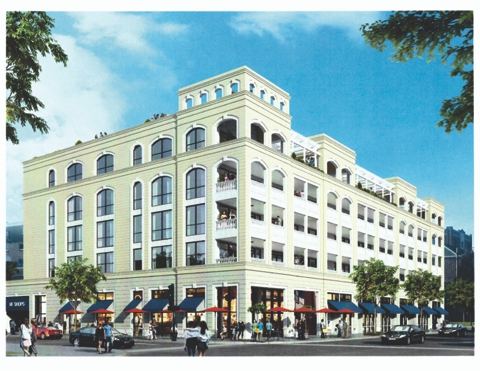
Fact: Objectively speaking, this bulky block-long box of a building (shown at the right) doesn’t achieve the plan’s goals of new housing that is “compatible with, complement, and enhance the existing scale and character of the neighborhoods” nor “maintain and enhance the Village’s overall atmosphere and character.” It’s difficult to think of any existing structures in River Forest with which this big box is compatible.
As proposed, this building certainly does not meet the plan’s goal of developments “consistent with the character of the Village.”
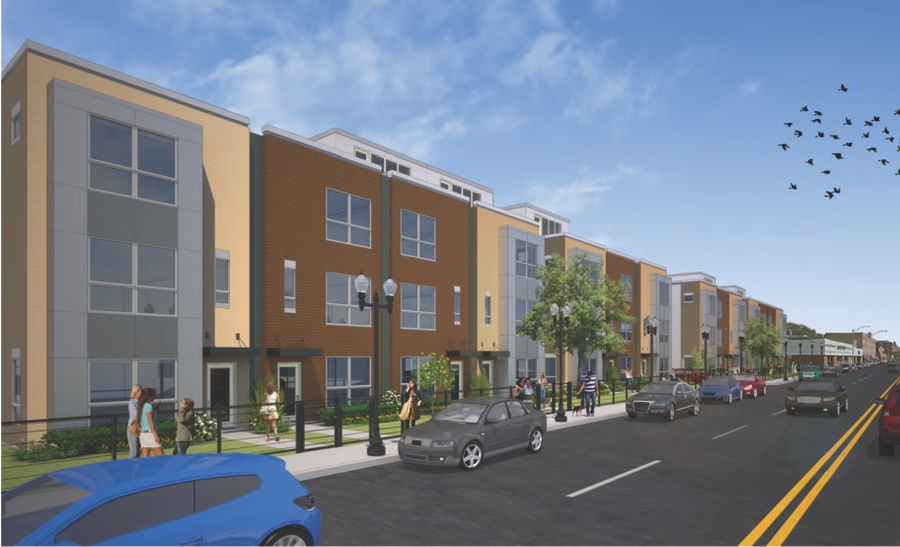 A more attractive alternative that eliminates the bulk would to break up the huge structure with alternating facades and alternating setbacks as illustrated by this drawing of new townhouses in Oak Park. This is a technique used to create a less bulky appearance and that could make this building appear compatible with River Forest architecture.
The village’s adopted policies call for development to serve the people of River Forest. This Lake/Lathrop development serves only to pad its developers’ pockets with our TIF dollars. Why are we subsidizing developers who don’t need taxpayer subsidies to build housing the vast majority of River Foresters cannot afford to buy?

LemonAID is held every Sept 11 from 3 p.m. to 7 p.m. on the
700 Block of Bonnie Brae (between Chicago Ave and Oak Ave).
Over $200,000 raised since 2002 to benefit local organizations
Each year’s recipients are announced early each summer.
Details here (including an opportunity make your secure donation online and a map with traffic patterns).
************************************************
The news reported below is old news. I’ve left it up here in case anybody might still be interested. — Daniel Lauber, August 19, 2018
EMSL Labs Withdraws Application for Madison Street Laboratory Site
Dateline: June 3, 2014 — Today EMSL Analytical officially withdrew its application for a special use permit to operate a testing laboratory at 7716 Madison in River Forest. The letter, dated May 16, arrived at River Forest Village hall today, June 3. Most likely EMSL purchased the property with a contingency clause that allowed it to cancel the sale if it did not receive the special use permit (that’s a very common clause in commerical real estate transactions). Our educated guess is that EMSL realized it would not receive the special use permit and waited to withdraw its application until the seller returned EMSL’s earnest money on the purchase.
At the May 8 Zoning Board of Appeals public hearing, about 85 River Forest residents showed up to express their opposition to the proposal. Some unfairly criticized EMSL for being represented by an attorney and for presenting witnesses. However, that is exactly what an applicant is supposed to do. All applicants for a special use permit or zoning map change should be represented by an attorney or city planner and should present witnesses. Constitutionally mandated due process requires the Zoning Board of Appeals to arrive findings of fact based solely on the evidence presented at the public hearing and to arrive at a decision in accord with the standards in the zoning code for awarding a special use permit.
7 Years Ago in March 2013:
District 90 Put Controversial Roosevelt Middle School Plans on Hold
Dateline: March 10, 2013. River Forest School District 90 announced March 8 that it decided to delay implementation of the $1.2 to $1.6 million Roosevelt Middle School Renovation Plan and seek additional input from the community:
The River Forest School District 90 Committee of the Whole recommended at its March 7 meeting to forego proposed construction on the Roosevelt Middle School exterior campus this summer to allow the district more time to have a more extensive dialogue with community members.
“As we presented the plans to the community over the past couple of months, it became clear from the response – both positive and negative – that we needed more time to gather additional input before moving forward,” said Jim Weiss, President of the District 90 Board of Education.
The plan caused an uproar when District 90 sought an intergovernmental agreement with the Village of River Forest to make Oak, immediately south of the Roosevelt Middle School between Lathrop and Jackson, permanently one way and to widen the street and create more than thirty 90–degree parking spaces to replace the current 14 parallel parking spaces. The school needed more spaces because its renovation plans would reduce the number of off–street spaces from 59 to 30. Neighbors objected to these changes at the village’s Traffic and Safety Committee which rejected the permanent one–way request but could not agree on how to handle the angled parking request. District 90 dropped its request to make Oak permanently one way. But the problem of how to replace those 29 off–street spaces remained.
When the proposal went to the village board’s committee of the whole meeting on February 19, about 30 residents appeared in opposition to the request for angled parking. Your author presented a review of studies on the relative safety of parallel and angled parking produced by the Oregon Department of Transportation that concluded that parallel parking is significantly safer than angled parking. Ed and Gina Voci submitted a study by the National Highway Transportation Safety Administration on “back crashes” generated by angled parking.
Village president John Rigas, trustee Carmela Corsini, and trustee Mike Gibbs called for the staff to draft an intergovernmental agreement to be voted on at the board's March 11 meeting — assuming that the agreement would be for the District 90 angle parking plan as originally proposed (that’s the only way staff could write an intergovernmental agreement). Village trustees Catherine Adduci and Sue Conti sought to delay drafting the intergovernmental agreement until District 90 could meet with the neighbors to address their safety concerns and possibly revise it proposal. The Village Board eventually decided to proceed with drafting the intergovernmental agreement for a vote on March 11 so District 90 could start soliciting bids for the renovation work. But trustee Adduci was able to get all to agree to request that District 90 meet with neighbors first and to use the village’s email news blast to alert residents of the forthcoming meeting
Nobody could have predicted what would transpire in the next two weeks.
District 90 scheduled a meeting with neighbors for February 27. Meanwhile District 90 staff reviewed the studies about parking safety and collaborated with several residents to create an alternative parking plan that retained the parallel parking on Oak and established permit–only parking for Roosevelt Middle School faculty and staff on only one side of two nearby streets. Click here for the three–page plan including a map of the streets. By the time of the February 27 meeting with neighbors, District 90 announced it had withdrawn its request for 90–degree angled parking and was supporting the permit–only parking plan.
More than 30 residents attended the February 27 meeting. While two or three supported angled parking rather than have school staff park on their blocks, there seemed to be a general consensus in favor of the permit–only parking for faculty and staff. The crowd was split on whether the entire renovation proposal was a prudent use of taxpayer money. A week later the District 90 board announced its decision to delay its renovation plans to allow “more time to have a more extensive dialogue with community members.”
Alert: Now that District 90 is making a more concerted effort to involve the community, folks should get involved. We presume that the District will find effective ways to alert residents of meetings to discuss the plans. We will do all we can to alert our readers to any meetings that are set up.
River Forest Tennis Club Delays Submitting Application for Light Towers
Dateline: March 1, 2013. The proposal to install twelve light towers around the tennis courts at the River Forest Tennis Club has stalled with the club deciding not to submit its formal application at this time. According to an email from Village Administrator Eric Palm, the RF Tennis Club “has opted to not submit their application for a planned development permit for lights at their courts at this time.”
The tennis club was seeking a Planned Development permit to install twelve 26–foot tall light towers to illuminate its tennis courts at night. While tennis could be played at night during the summer, the club wanted to expand its night playing hours to after dark in the spring and autumn. Controversy erupted with how the Development Review Board (DRB) was handling the proposal. At its November 2012 meeting, the DRB waived several requirements for impact studies to be conducted. And while one DRB member who sits on the tennis club’s board most correctly and honorably recused himself from the proceedings, two other members of the tennis club did not despite the appearance of a conflict of interest. River Forest’s Ethics Ordinance provides:
"6. Conflict Of Interest: In order to assure their independence and impartiality on behalf of the common good, officers shall not use their official positions to influence government decisions in which they currently have or are actively pursuing a financial interest or an organizational responsibility or personal relationship which may create a conflict of interest, or which give the appearance of a conflict of interest. As may be related to matters before them, officers shall disclose investments, interests in real property, sources of income, and gifts; and they shall abstain from participating in deliberations and decision making where conflicts may exist."
While River Forest’s village attorney ruled that they could vote on this matter, opponents argued that there is an appearance of a conflict of interest since the DRB members who belong to the tennis club — and/or their families — would benefit from the later night hours the light towers would enable.
As village administrator Palm reported, the tennis simply is not submitting its formal application at this time and nobody knows what its future plans are for this proposal. However, we are told that the members of the Tennis Club are deeply divided over the proposal to install lights and the light proposal is in jeopardy. If you have any verifiable new information, please share it with us by clicking here.
River Forest Voters Turn Down Home Rule in 2012
Dateline: Nov. 6, 2012 — Nearly 80 percent of River Forest voters voted against adopting home rule on November 6, 2012.
The vote was 4,307 “No” to 1,079 “Yes.”
Meanwhile the referendum to repeal home rule in Maywood failed with over 60 percent voting to keep home rule. No Illinois municipality has repealed home rule since 1983.
On October 8, 2012, the River Forest Village Board voted unanimously to amend the village’s zoning ordinance to allow structures in nonconforming side yards to be extended 20 feet as of right instead of the current 12 feet — as recommended by the village’s Zoning Board of Appeals (ZBA) in September. Testimony and data presented to the ZBA established that 20 feet would allow the vast majority of room additions that have been sought in River Forest since 2008. Only those that would extend or expand the length of the structure in the nonconforming side yard more than 20 feet would require a zoning variance. The ZBA voted 4 to 1 to reject allowing a second story to be built in a nonconforming side yard as of right. In recommending this change, the ZBA rejected the proposal to allow any size expansion of property with a nonconforming side yard as of right. The ZBA concluded that larger expansions of buildings in nonconforming side yards warrant the heightened scrutiny of a public hearing to make sure that they do not impinge on the adjacent home(s), block light or air from the next door neighbor, or invade their privacy.
These provisions apply only to nonconforming side yards — side yards that are narrower than the zoning code now allows. These would apply to most River Forest homes built before 2008. If your side yard complies with the side yard requirements in the zoning ordinance, these provisions do not affect your property.
The motion the ZBA adopted was:
Repeal Section 10–8–7.C2.b. and replace it with this language:
History. On June 18, the River Forest Village Board sent back to the Zoning Board of Appeals (ZBA) proposed amendments to the village’s zoning ordinance that would remove home owner protections from the ordinance by allowing nonconforming uses to expand further into side yards even if their expansion would adversely affect the next door neighbor. Please bear with us as we explain what is at stake.
Currently the village’s zoning code requires that the yard on the side of your house be at least five feet wide or 10 percent of the width of your lot, whichever is greater. This means that if you build a house today, there’s got to be at least five feet from its wall to the next door neighbor’s property line. But if your lot is 100 feet wide, then the side yard would have to be 10 feet (10 percent of the width of the lot). To allow for adequate space between homes to ensure some privacy, allow for adequate light and air, and avoid overcrowding, a new house cannot be built within these five feet of side yard.
During the decades before the zoning code was modernized a few years ago, the minimum side yard was as little as three feet. So in an old community like ours, the vast majority of homes were built with just a three foot side yard — something you can no longer do with new construction. Homes that were built with a three foot side yard do not conform with today’s minimum five foot side yard. The part of the structure that is within the five foot side yard is considered a legal nonconformity and can stand indefinitely.
But every so often a home owner — about ten during the past five years — wants to add to her house or build a garage that would be within the five foot side yard that is currently allowed. Rather than outright prohibiting enlarging such nonconformities, River Forest allows these nonconformities to be enlarged no more than 12 feet as of right — only a building permit is needed. But for enlargements greater than 12 feet, River Forest allows a home owner to expand these nonconformities if they can demonstrate to the Zoning Board of Appeals that the proposed expansion will not generate adverse impacts on the neighbors, will not alter the character of the neighborhood, and will meet other standards in the zoning code that assure that the proposed expansion of the nonconformity will not produce more adverse impacts than positive impacts. The home owner needs to show that the physical surroundings, shape, or topographical conditions of his property will cause a specific hardship, not just an inconvenience if he must follow the strict letter of the zoning ordinance’s side yard requirement. The owner much also show that receiving a variance from the zoning requirements is the only way he can overcome the alleged hardship enough to permit a reasonable use of his property.
These provisions add flexibility to zoning code while protecting adjacent neighbors from huge expansions of nonconformities that might cause flooding on their land, reduce the air and light their home gets beyond reasonable minimums, block views, invade their privacy, or other adverse impacts. Variances like this prevent our zoning ordinance from being a rigid one–size–fits–all zoning code.
As required under Illinois and River Forest law, the amendments to the zoning text were sent to the River Forest Zoning Board of Appeals (ZBA) for public hearing and a recommendation based on findings of fact generated by the public hearings.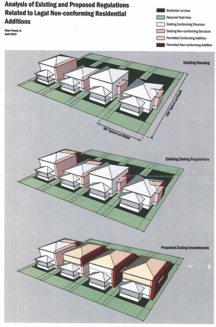
The Zoning Board of Appeals held two nights of public hearings on the proposed text amendments. It heard from one village trustee and the village administrator who argued in support of the amendment. And it heard from the village’s city planning consultant who presented An Analysis of Existing and Proposed Regulations Related to Legal Nonconforming Residential Additions, which clearly showed that this amendment to end case–by–case review would allow homes to be expanded even when the expansion would block light and air from adjacent homes, block views, or cause flooding on an adjacent property. He showed that this zoning amendment would create the potential for extremely large structures to be built that are incompatible and incongruous with the surrounding neighborhood. Click here to see a visual depiction of what is currently allowed and what would be allowed if the text amendments ha been adopted on June 18.
No witness provided any factual evidence that requiring case–by–case review has deterred property maintenance plans. No witness showed that the side yard requirements had caused construction inconsistent with a home or neighborhood. In fact, no witness even tried to show that case–by–case review had caused any undue burden on property owners who wanted to expand a use in a nonconforming side yard more than 12 feet.
While some proponents of eliminating case–by–case review argue that the fee to apply for this variance is a burden on applicants, they proffered no factual evidence to show that it is a burden. But if the village trustees feel the fee is a burden, they can simply vote to substantially reduce the fee to apply for a side yard variance or even eliminate it.
But the village board’s zoning text amendments would allow home owners to expand all nonconforming encroachments even though they could not be built today –– without regard to possible adverse impacts on adjacent homes. Should every expansion of a nonconformity be allowed without first factually determining that the proposed expansion of the nonconformity won’t cause flooding next door, won’t block off the light and air to the adjacent neighbors, won’t alter the character of the neighborhood, and won’t generate adverse impacts on the neighbors?
Or should an owner have to demonstrate to a fact–finding body — the Zoning Board of Appeals — that expanding this nonconformity which could not be built new today will not cause more harm than good? Shouldn’t the owner who wants to do something that is not allowed of new construction show that her proposal will not harm the neighborhood and that there is no other way to build except by making the nonconformity even larger?
That’s exactly why need to retain the case–by–case review of proposals that would make a nonconforming use even larger.
Below are the Findings of Fact and resolution that the Zoning Board of Appeals adopted unanimously following two nights of public hearings on the proposed zoning code amendments:
Based upon the evidence presented in writing and orally at public hearings conducted on March 8, 2012 and April 12, 2012, the Zoning Board of Appeals makes the following findings of fact related to the proposed amendment to Section 10–8–7 of the River Forest Zoning Ordinance:
Over the past four years, a total of five to ten requests for variances to continue or expand nonconforming side yard setbacks have been submitted to the Zoning Board of Appeals.
No factual evidence was introduced to demonstrate that the current zoning provisions restricting the expansion of nonconforming side yard setbacks have deterred property maintenance plans.
No factual evidence was presented to show that Section 10–8–7 has caused construction inconsistent with a home or neighborhood in order to conform to the zoning code.
No factual evidence was introduced that demonstrated that Section 10–8–7 has caused any undue burden on property owners required to request this variation to continue a nonconforming side yard setback.
The one expert witness who testified at the hearings, River Forest's planning consultant, presented “An Analysis of Existing and Proposed Regulations Related to Legal Nonconforming Residential Additions,” uncontradicted factual evidence demonstrating that this amendment would allow homes to be expanded as of right even when the expansion could block light and air from adjacent homes, block views, or cause flooding to an adjacent property.
River Forest's planning consultant presented uncontradicted factual evidence that amending Section 10–8–7 as proposed would create the potential for extremely large structures to be built that are incompatible and incongruous with the surround neighborhood.
Proposals for variances to continue nonconforming side yard setbacks have been made to the Zoning Board of Appeals that would generate adverse impacts to adjacent properties.
NOW THEREFORE, the Zoning Board of Appeals makes the following conclusions based upon the evidence presented at its public hearings and makes the following recommendation pursuant to Section 10–5–5(B)(2):
A. Based on these findings of fact, the Zoning Board of Appeals concludes:
(1) The public interest is best served by examining proposals to continue a nonconforming side yard setback on a case by case basis.
(2) There is no basis in fact for eliminating these provisions of Section 10–8–7 and that the public interest would not be served by allowing all nonconforming side yard setbacks to be continued or expanded.
(3) The proposed amendment is contrary to the following purposes of the River Forest Zoning Ordinance:
10–2–1 H. Establish a basis for development and preservation of an attractive physical environment which enhances the image of the community;
10–2–1 I. Control the impact a development will have on the surrounding area by regulating the bulk and height of buildings;
10–2–1 M. Ensure adequate natural light, clean air, privacy, and convenience of access to property through a combination of regulatory controls and incentives;
10–2–1 N. Control the accumulation or runoff of storm or flood waters through the use of site development standards to protect persons and property;
B. The Zoning Board of Appeals recommends by a vote of 6 to 0 that the River Forest Village Board reject the proposed amendments to Section 10–8–7 of the River Forest Zoning Ordinance.
Please  to ask questions or request additional information.
Be Alert: Know What’s Happening in River Forest
To join our independent River Forest Matters Email Alert List,  and ask to be placed on our email list. You’ll receive no more than ten emails a year, probably a lot fewer.

The Village of River Forest maintains an email list for residents who want email notices sent to them of important village events, emergency alerts, and crime alerts. Click here to go to the village’s sign up page. The village sends out a monthly newsletter. But it will keep you much better informed and increase your opportunities to voice your views to the Village Board. (This is the village’s email list. Our email list is entirely separate and independent of the village government — to sign up for it, see immediately above.)
Village Board Approves Red Light Camera Ordinance (Aug. 2011)
Voters Approve 1% Hike in Sales Tax (Nov. 2010)
Citizens Advisory Committee on Village Finances Report Available Here (2010)
Exclusionary Corridor Plan Provisions Eliminated (2010)
Freeze on Number of Multifamily Dwellings Repealed (2009)

Author: River Forest resident Daniel Lauber